Worn Out Retaining Walls Rebuilt From the Ground Up
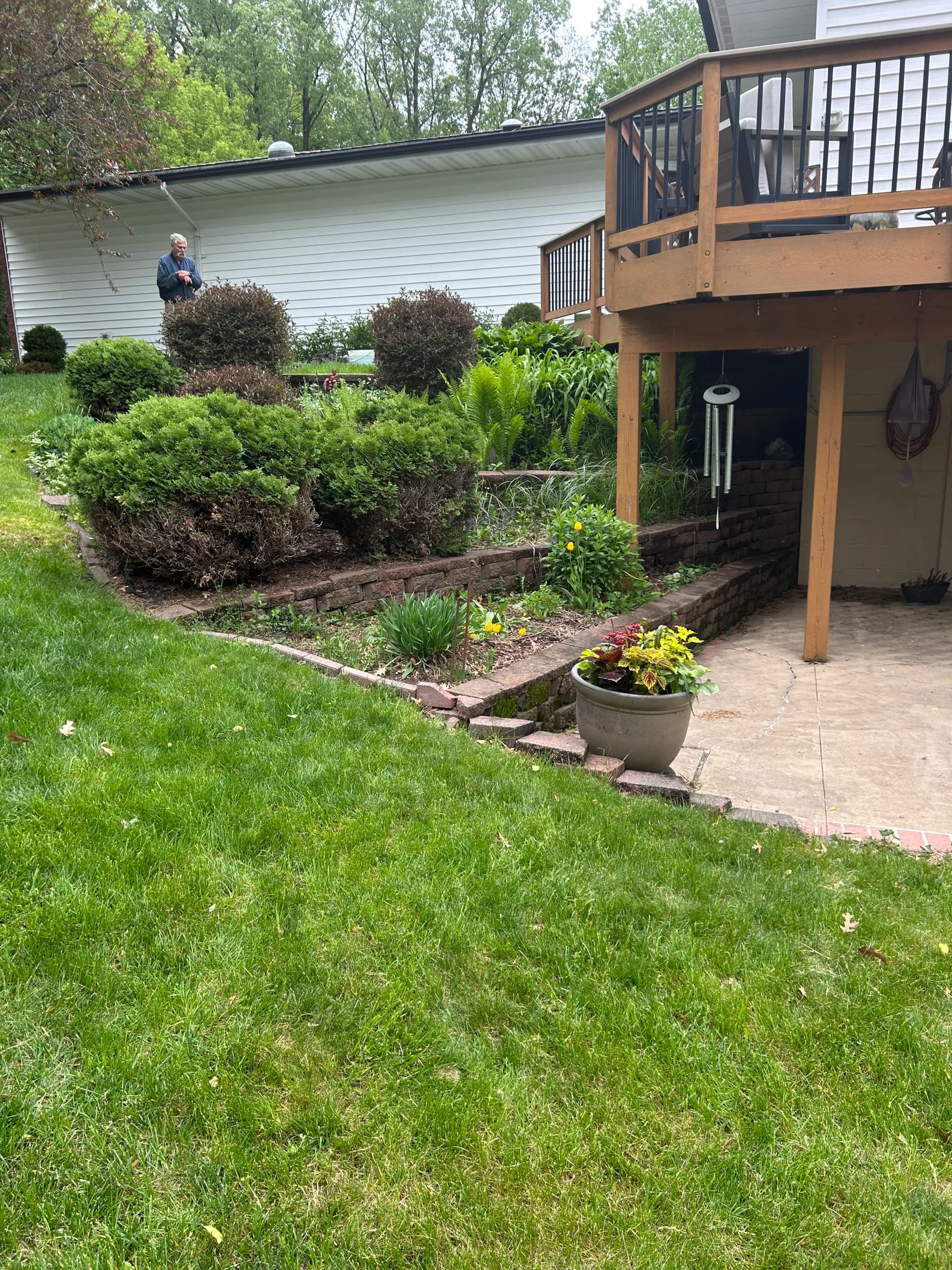
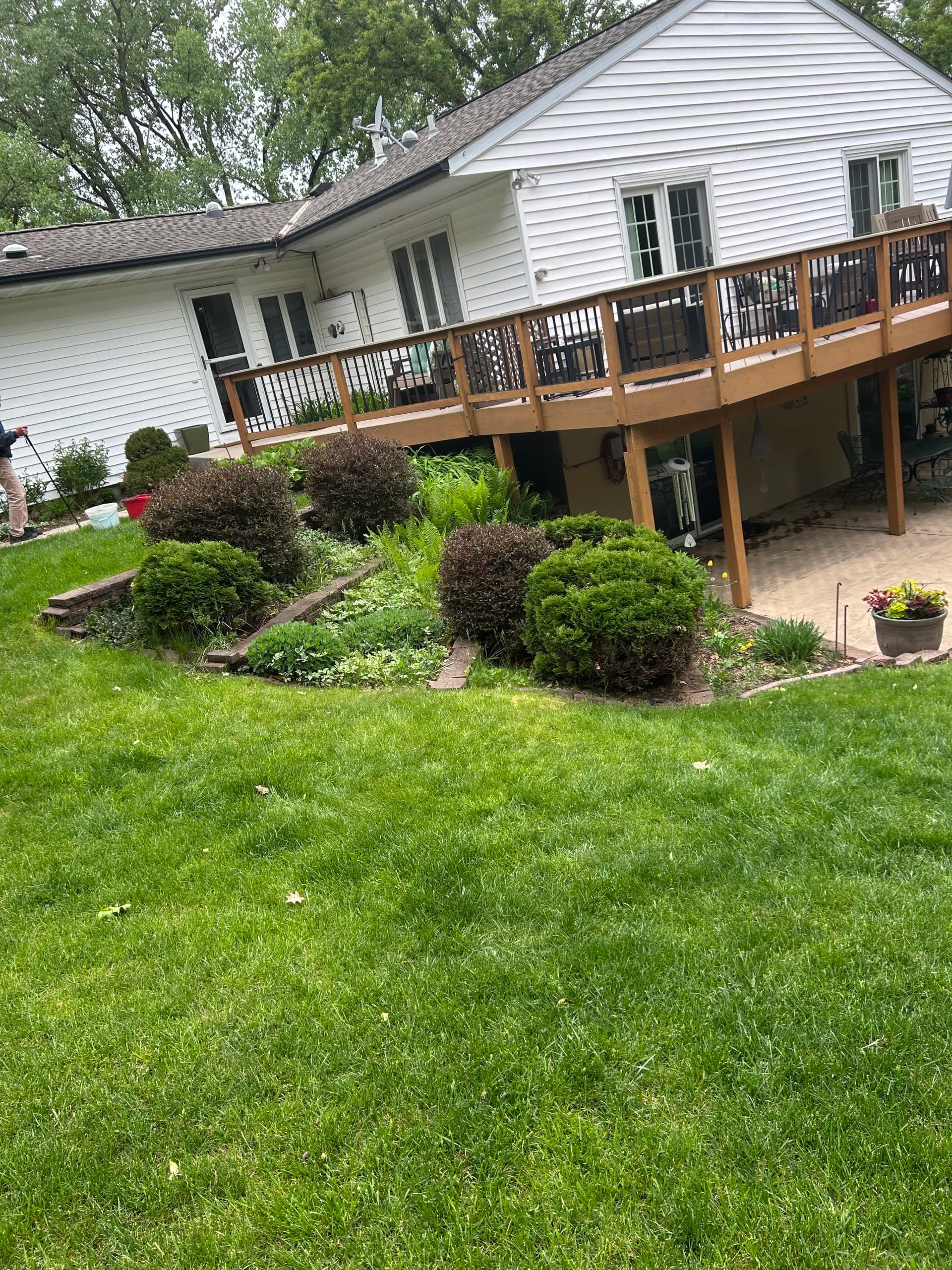
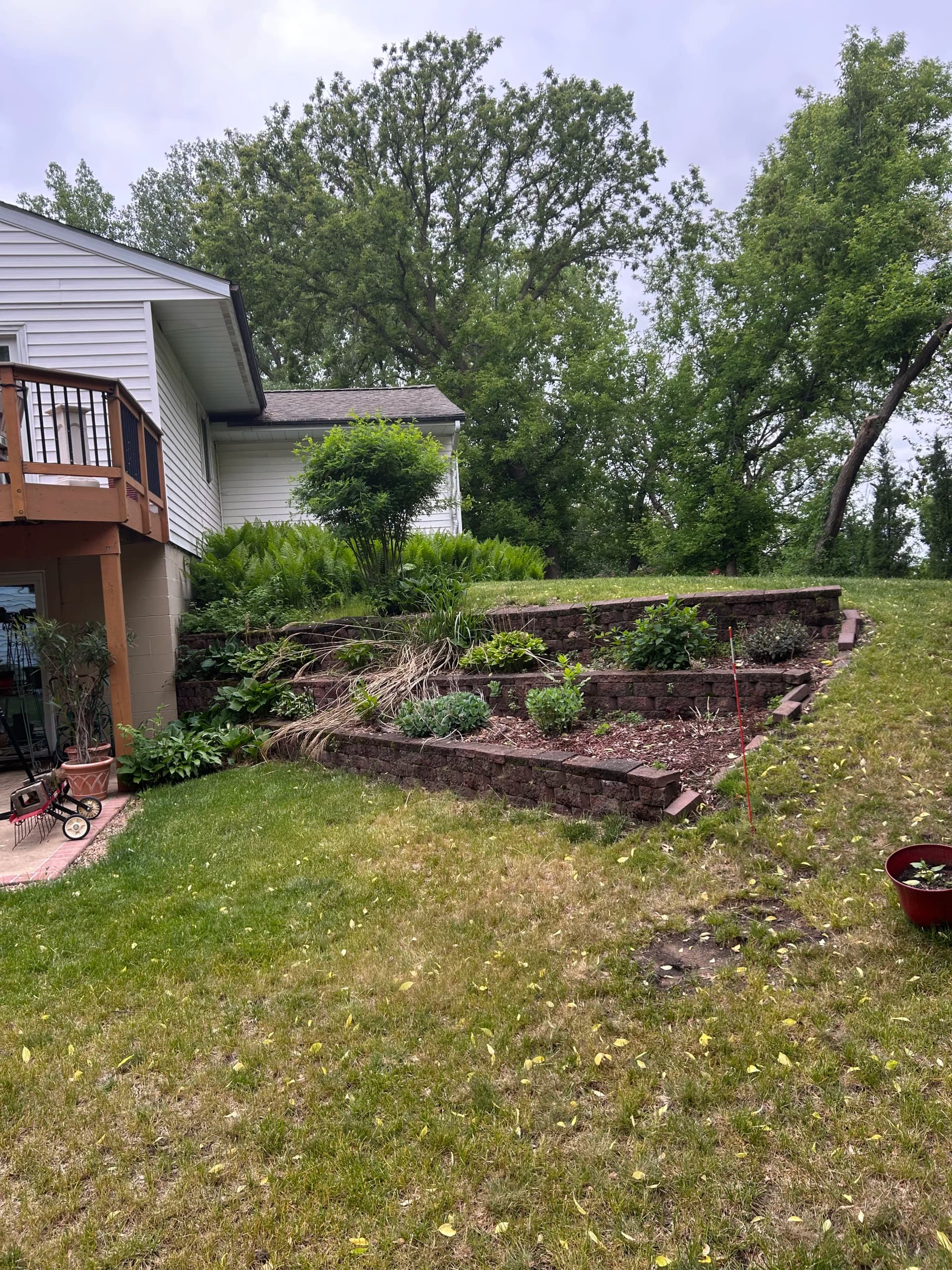
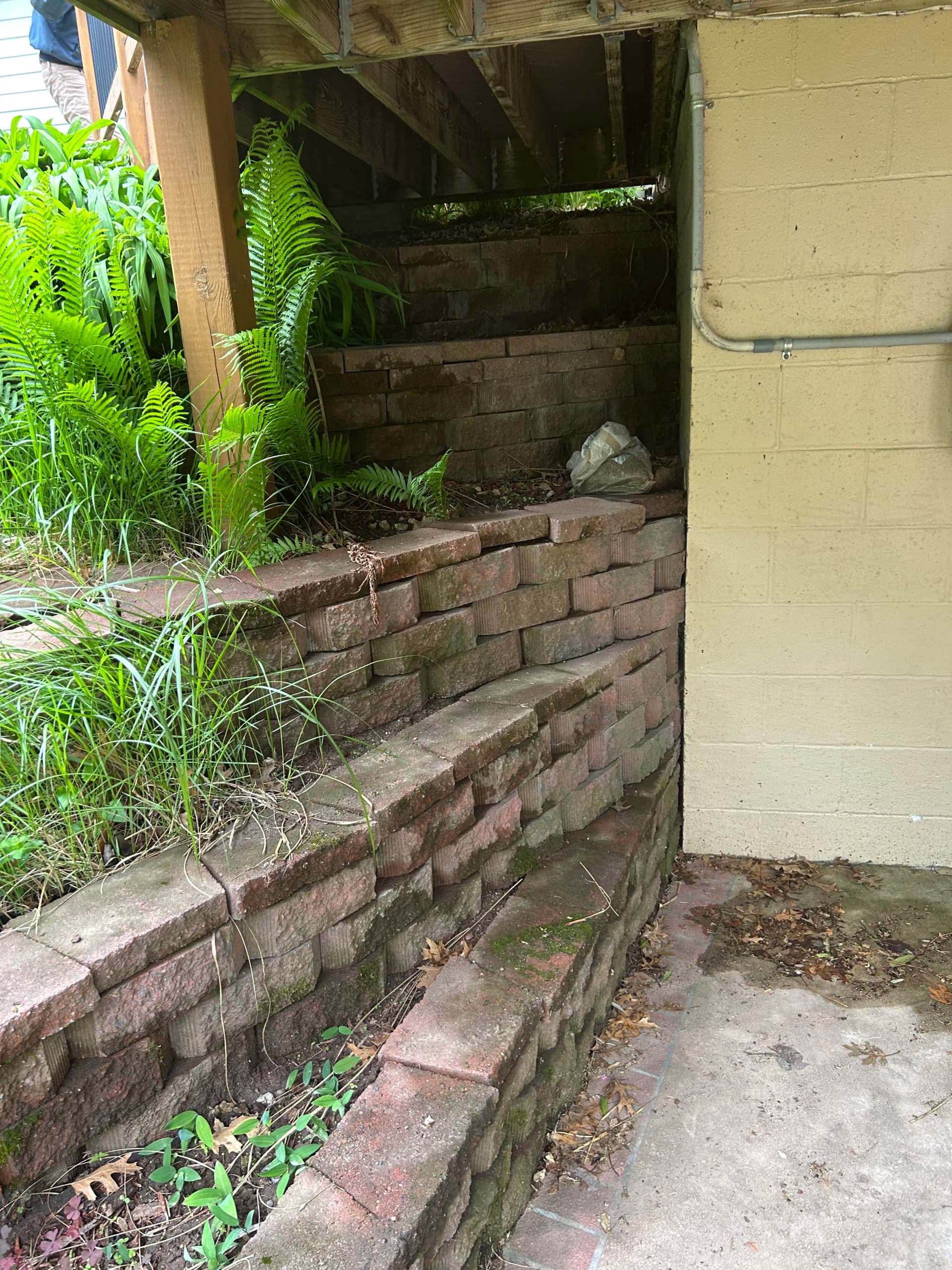
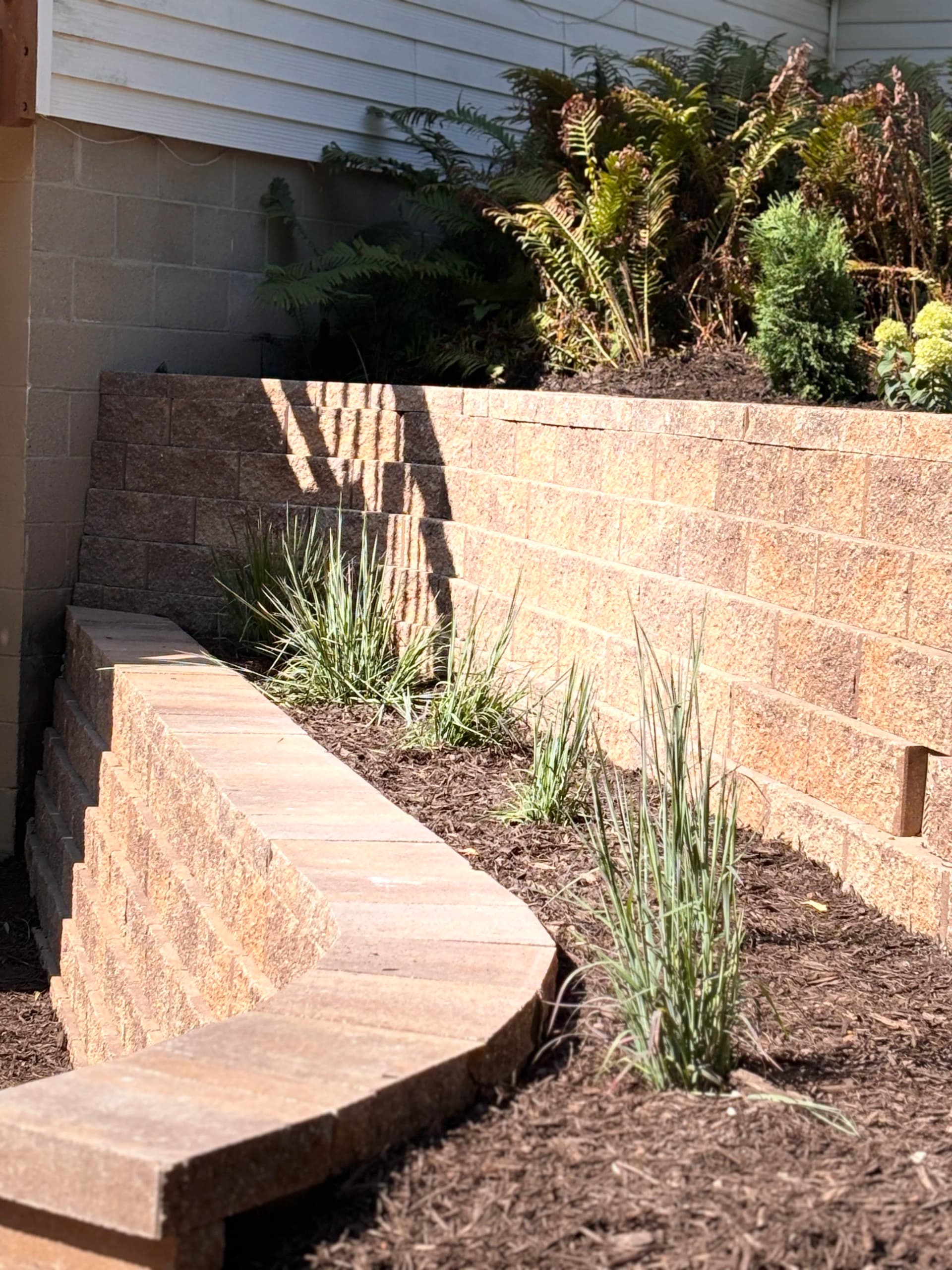
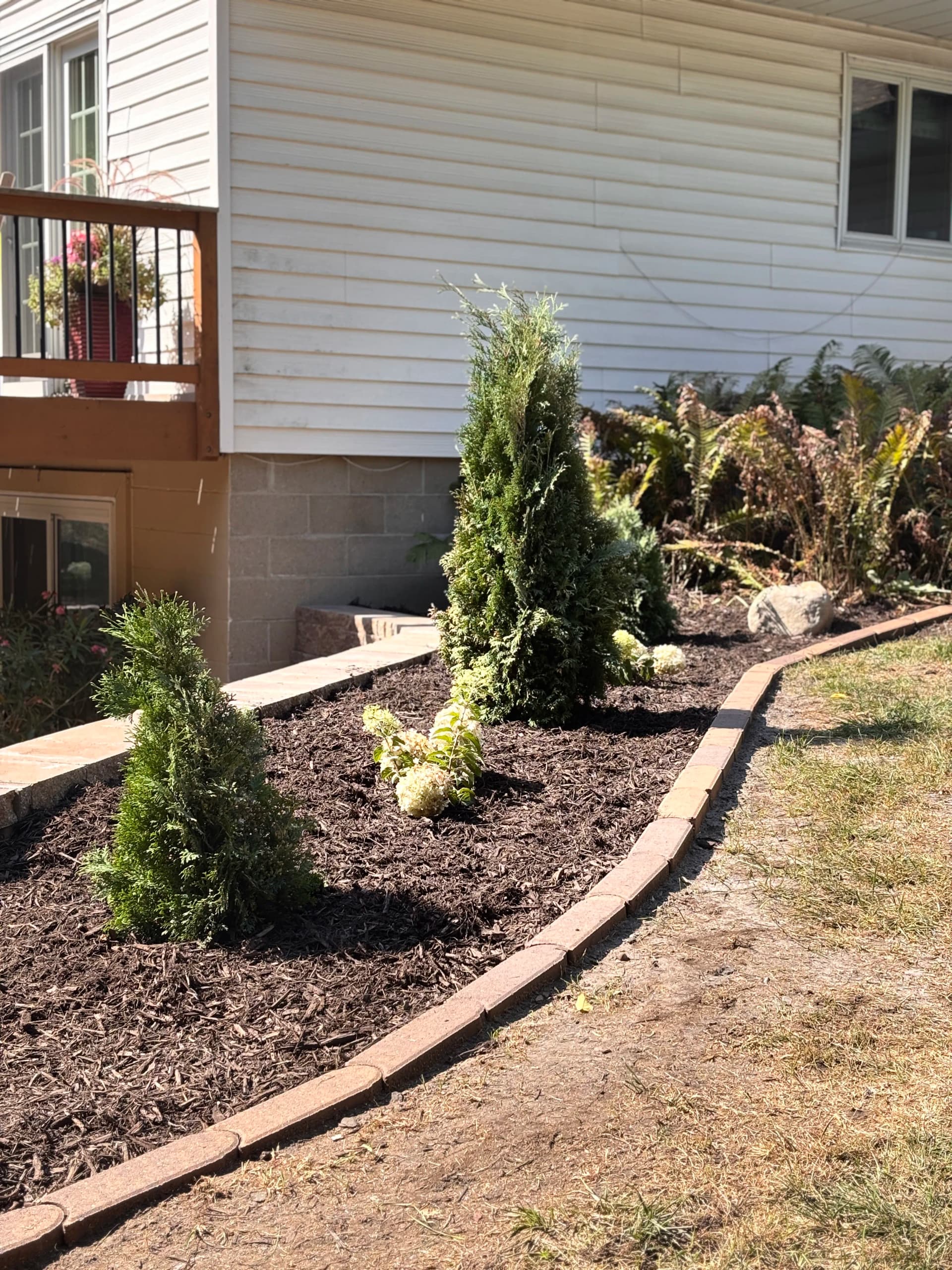
Here's what we were working with - a pair of aging retaining walls around the back of this home that had seen better days. The blocks were shifting, moss-covered, and starting to lose their structure. The beds behind them were overgrown and hard to manage. It wasn't doing the yard any favors, and it wasn't going to fix itself.
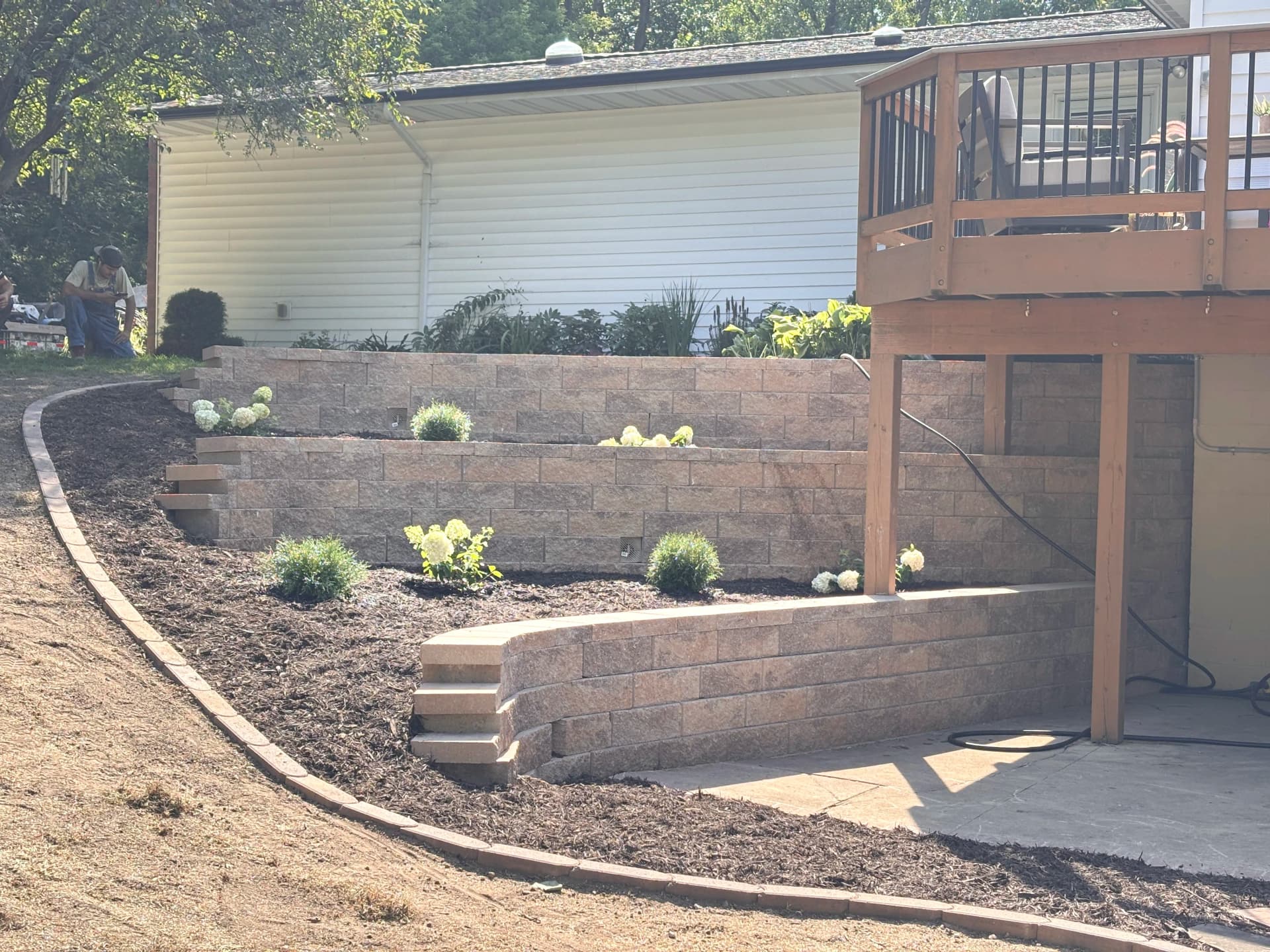
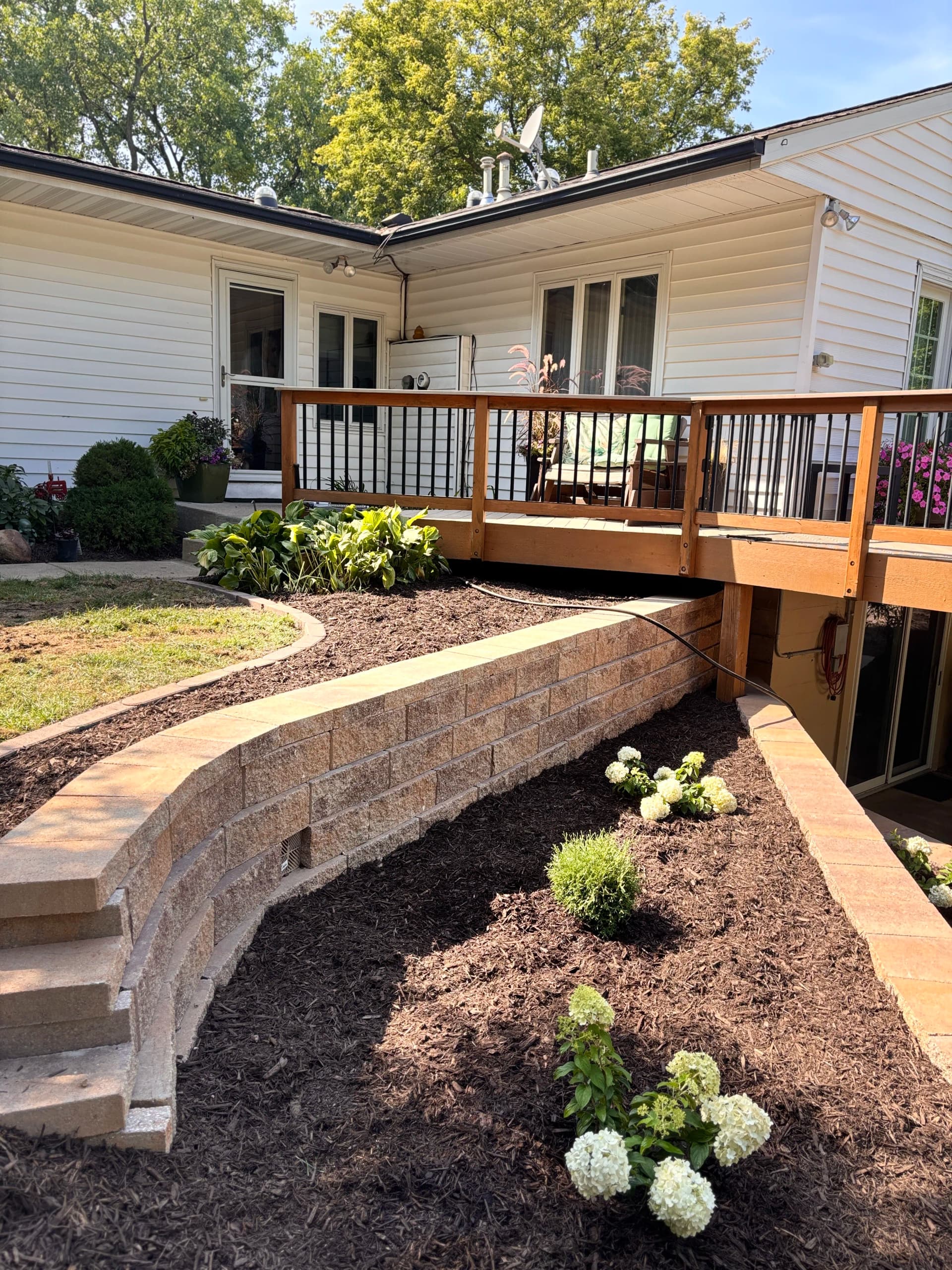
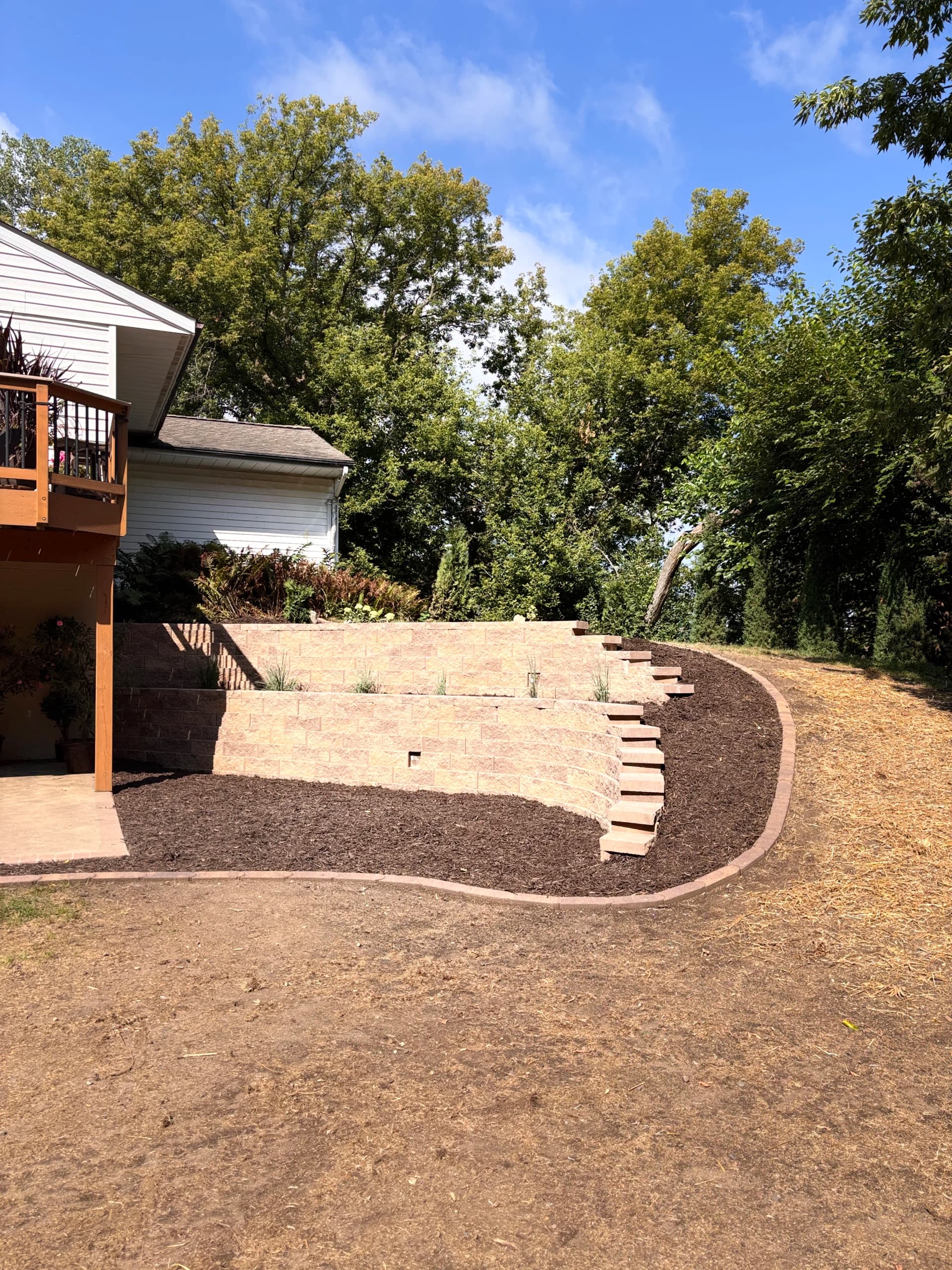
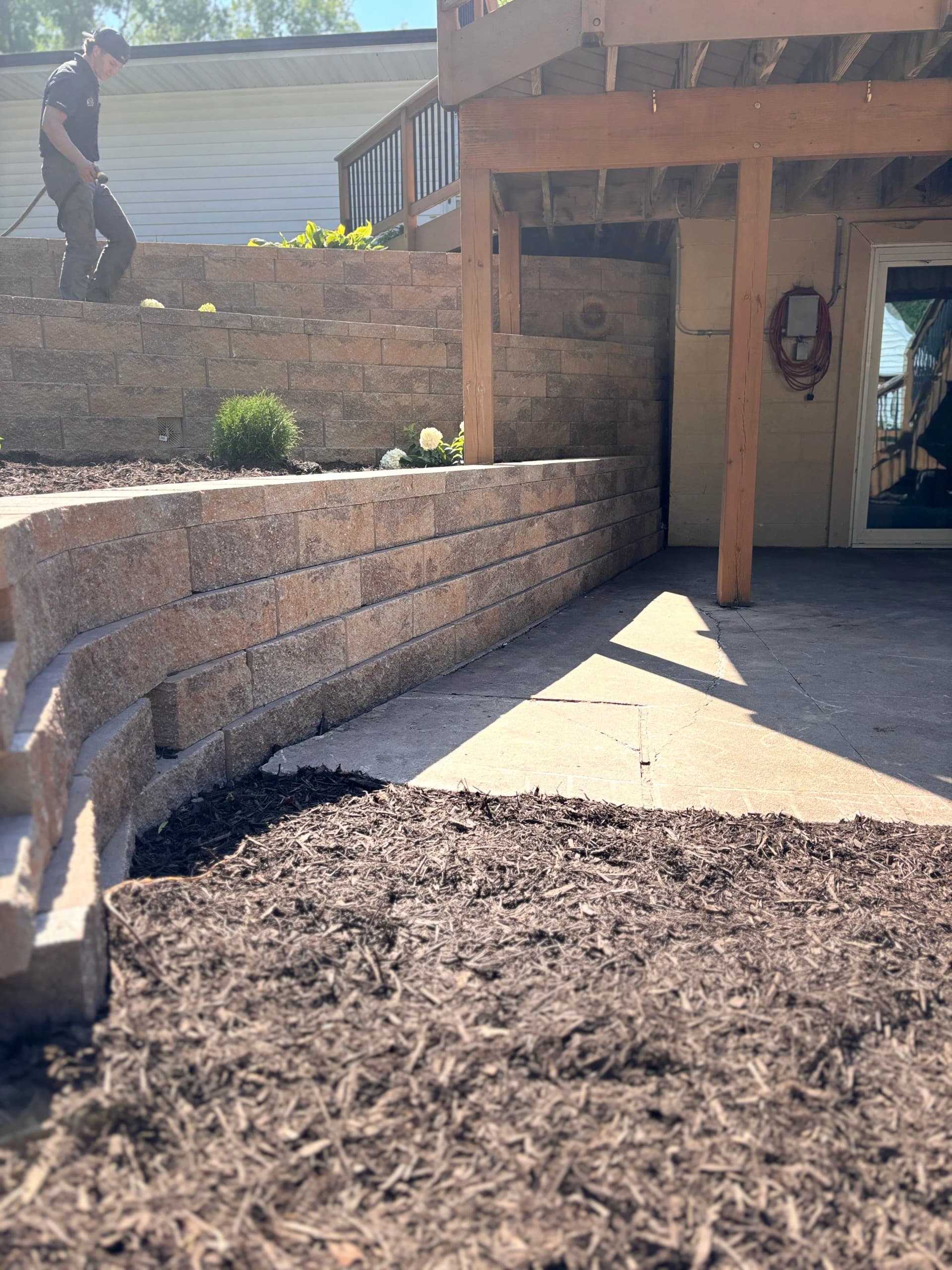
We tore everything out and started fresh. We rebuilt the entire area using Rochester concrete retaining wall block - a solid, textured block that holds up long-term and looks sharp doing it. The walls were re-laid in a curved layout that follows the natural slope of the yard, which also helps with drainage and soil pressure over time. That curving shape isn't just aesthetic - it actually distributes load more evenly than a straight wall would.
Once the walls were up, we finished the caps with Rochester concrete bullet edger to give the tops a clean, defined line. Then we got into the landscaping side of things - fresh plants tucked into each tier, dark brown mulch laid throughout the beds, and a brick edging border along the outer perimeter to keep everything contained and easy to maintain going forward.
The difference between a wall that just holds dirt and one that actually adds structure and character to your yard comes down to material choice and how it's installed. When you use quality block, set it right, and tie in the landscaping around it, the whole space starts working together instead of just sitting there.
A sloped yard with failing walls is one of those problems that tends to get worse the longer you wait. Soil shifts, blocks move, and erosion quietly does its thing underneath. Getting ahead of it with a full rebuild - walls, plants, mulch, and edging - means the space is set up to hold and look good for years.